Right at its snaky tail-end, 2016 tripped me up. I skidded on a patch of ice, fell heavily, broke the bone linking my arm and shoulder. New Years Eve’s cocktail was codeine and ibu-profen, the party dress a sling. I don’t know how Venus di Milo does it -asymmetry works better for statues, anyway. I’ve had to give up the ‘go’ for while, sign off work, move back with my mum because I can’t dress, turn a lock or wash my hair by myself.
Chateau Marmont detailing, or so I like to think…
Ironically, before I fell upon that bad patch, I was in an auspicious place, grateful for the past year, a mixed bag of new beginnings, discovery and trying things out for fit. The prospect of 2017 left me feeling like I had so much to do- cultivate last year’s fertilest projects, give more and most of all, be part of a world that grows up to face its responsibilities and dreams. Then, I inadvertently slip back to childhood, dependency. Sulking becomes tiresome. I wonder, is my current state, by this indoor orange tree so different from where I need to be?
Commuting? Better call Becky with the good hair…
So I have to move with my healing body’s rhythm and not the abracadabra speed of wishful thinking. As long as it takes. My former routines defined by external obligations and delights make no sense. Daytime naps and waking up at four in the morning to listen to music and read novels, do. I’m also cultivating some more realistic role models: 1) John Lennon and Yoko Ono, who conducted interviews from bed; 2) Tinkerbell the cat – unapologetically lazy. The Romans began the new year in March, anyway…
‘I’m a little Greek…’ It’s a line from the lips of Elizabeth Taylor’s Cleopatra that accidentally resonates with me. As the daughter of Greek Cypriot immigrants, who grew up in quintessentially English South-west London, and hangs out with mainly British and international friends, I’m slightly Greek too. There was a time when I was more Greek, as a truly bilingual child, who went to Greek school and holidayed in Cyprus. But then when my maternal grandmother, a lady who nurtured any Hellenism I had, died, I immersed myself in other languages and cultures. In them, I sought freedom, the chance to be someone other than who my family had in mind. Nationalism- Greek, Cypriot, English, I found rather naff. Why would you want to be a flag-flying Aristotle or Shakespeare-quoting loony by default when y0u could choose to adopt the teachings of Seneca or Anais Nin? If anything, I saw my identity as European: multi-lingual, versatile, open, but post-Brexit, I wonder if that’s still valid with my British passport.
How to be ‘a little Greek’: wear sunglasses in every situation you can possibly get away with…
Still, probably because I’m not a true Greek, I find real Greeks, (the ones who quote Plato, smoke cigarettes and listen to London Greek Radio), fascinating, especially how they behave in public. Though my Greek has stagnated at the level of a lisping child’s my ears are still fine-tuned for the lingo. And do you know what? Greeks are always discussing the scene in front of them; they’re looking at me, scrutinising you. You can’t help but be drawn in.On the train, a girl asks her boyfriend whether he finds you attractive. After staring a while, he responds diplomatically for a Greek, by diverting the question: ‘Why is she eating chocolate? Is it necessary?’ ‘She’s on her period!’ (This actually loses something in translation, because in Greek it’s a one-word explanation) To this day, I wonder if my blush at being thus spot-lit,revealed that I understood. I wonder if they would have even cared… I was probably one of many curiosities in their day.
Actually, life’s more interesting if you see it like a curious Greek…
Yesterday, when I had an hour to myself in an Austrian café in Angel, my thoughts were diverted from strudel by the arrival of a hipstery looking bunch. They hovered outside the café a while, warming up the scene all cigarettes, denim, leather, hair gel and orange-red lipstick (gender dependent) . The swagger; the dynamic gesticulations; the brillantine gloss on their brand of hip : what other nationality could they be?* True to form, their conversation turned to the café: the food, the atmosphere and most of all the clientele. Who were they? What were they doing? Were they worth anyone’s attention? They noticed the trendy couple on the blind date, the homelier ladies who tea, me as I sat doodling in my battered blue notebook. The girl said she’d like one like that, to write down her thoughts. The guy wondered what I was writing about so furiously. I blushed again, signalling that I had understood, but this time sat up straight, produced elaborate flourishes on my gs and ys, draw intricate marine-life inside a greetings card.If I was being so openly watched, I would be part of the spectacle, play up to the role of ponytailed Sunday scribbler. I think how these people know, to misquote Audrey Hepburn’s Sabrina, how to ‘be in the café , and of the café’; to treat it as a glamorous watch point, and not a convenience or escape.
How to arrive like a Greek, even when you’re not!
As I mentioned at the beginning, I’m a little Greek, so I too observe, analyse, eavesdrop, but more quietly. I write about the all-seeing Greeks, the tea-going brigade who point to a gooseberry tart behind glass, claiming that ‘with all that cream’ it resembles birthday cakes in Poland, before retiring to a table, plunging out of the present and laying into a much-hated, absent colleague. Most of all, my attention is caught by the couple to my right on the blind date, their imbalance of vitality.** On one side of the metaphorical see-saw is a pulpy female in tropical brights; on the other, a stoic, pallid male with Buddy Holly glasses, immaculate khaki shorts and white socks. Her enthusiasm could power a merry-go-round; I imagine that she’d balance a spoon on the tip of her nose to impress him. He’s stringent, unyielding as the elastic in his perfect ankle socks. He has a dry American accent and asks her if she’s read anything by Ian McEwan.She answers saucily- one book was okay; another, disturbing. He shuffles slightly. Does he want to get the bill, she asks. He must have work to do. He does want to get the bill, he’s meeting friends. Her face drops to her phone screen though her tone continues to be breezy. I’m saddened, concerned that her bubble has burst, that she’s been rebuffed because she’s not his type. I imagine that he thinks his type is sullen, lank-haired and probably French because he prides himself on being a romantic.
Ground evidence.
NOTES
*Cutting la bella figura is important to Greeks. And beautiful is tightly laced and manicured. Whenever I go to Cyprus, my cousins lament that I’m too grungy. My hair is un-straightened and un-curled. I’ve only brought a Boho-Brits-abroad suitcase of shorts, jeans and faded floaty dresses. When we’re getting ready to go out for a drink in town (in a casualish bar mind, I don’t own anything flashy enough for a Nicosia nightclub) everything is scrutinised, rejected and eventually something is accepted so that I don’t have to go naked.
**Once upon a time there was a café in Covent Garden called Notes or 1001 Blind Dates as my friends and I thought of it. Providing a chic, understated experience of wine, candlelight and vintage James Bond, Notes was the meeting of many a Tinderella and her Prince Smarmy. This crossing of expectation and reality, that provided hours of entertainment for everyone involved, has now been replaced with a Korean fast-food joint. Due to rising rents I think…
If you were deported, or less harshly, voluntarily expatriated, what would you need to feel at home in your new place? Would you embrace the differences or create the same kind of home anywhere?
These questions entered my head as I travelled through several homes in the past month and a half with my blue wheelie suitcase in hand: my childhood home; an AirBnB just outside Cambridge Massachusetts; a room in a family home in more rural MA; an air-mattress in a Lower East Side apartment and let’s not forget the night at the Blue Moon. Each location was different, and yet all came to resemble one another through my habits and chosen town haunts.
Could be anywhere… could be Massachusetts
When I arrived at my AirBnB in Cambridge in the middle of a rainy afternoon, jet-lagged and with zero phone charge, it felt completely unfamiliar. The red velvet cushions, bronze ornaments, turquoise printed wallpaper and delicate tulip-patterned crockery, made me feel like I had just stepped out of the book I was reading, Ohran Pamuk’s The Museum of Innocence. As though like Columbus, I had travelled in the wrong direction and ended up finding… the East. The neon signs on the local convenience store assured me I was in America; though the only appetising thing they sold was tabouleh…
The next day, before I found my workplace for the month, or even the internet, I found Karma Yoga Studio. I stepped in, thinking it would be nice to keep up my old hobby, and instantly made a habit of attending Karma’s (yes a Karma within a Karma) flow and restore classes on Monday and Wednesday evenings. The poses were slightly different, as were the names. Dragons, monkeys and dolphins expanded the menagerie beyond the domestic dog kennel. I could breathe more deeply and was more flexible, but had less balance. Still, I felt some continuity in the movement, something like home. They say home is where the heart is, and as I move, my heart is above my feet.
I wonder if it’s an option to not be at home in the place you travel to. To be like Odysseyus, stay as a tourist, taking in strange sights and cuisines, while having a firm idea of your origin as home. But if you’re elsewhere for a month, could you in your heart of hearts stay faithful to your home as you remember it? If you like drinking guinness in Irish pubs, wouldn’t you find a new local? Irish pub landlords all over the world rely upon your infidelity to home, and paradoxically, also upon your innate sense of home. I’m a fan of Irish pubs because they’re a friend to the small-bladdered as well as to those who like getting bladdered. Wherever you find an Irish pub, they’ll let you pee for free.
1369 degrees of welcome
If you move somewhere for any length of time, I’d say over a week or so, you’ll start to have favourites and orient your life around these points. While I was in Cambridge, I accumulated the following:
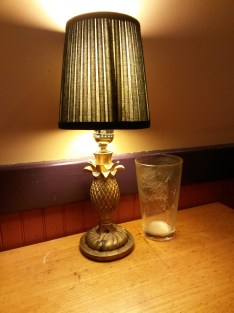
A FAVOURITE CAFE: 1369 on Massachusetts Avenue. Favourite Seat: The high table with the pineapple lamp. I once heard that in the days of expeditions, returning sailors would place a pineapple in their doorway to let the townsfolk know they had returned. I’ve been drawn to them ever since.
A LITTLE JAPAN: Theolonious Monkfish also on Mass Ave. Japan is the most enchanting place I have ever visited and I look for reminders of it everywhere I go. Here they play live jazz and serve sushi as they do in Murakami novels and Japan proper. The sushi rolls, called Snow White, Sleeping Beauty and Rumpelstitskin though, are strictly Disney.
A LITTLE PARIS: I found Paris twice through the Landmark cinema’s weekly emissions. In Paris almost every cinema will show pictures of the city; in London too, there is always a choice of French films; but at the Landmark, there was only one at a time, so the views stretched before me in celluloid, felt like love-letters from the old world to the new.
A LIBRARY LIVING SPACE: Lamont Library, Harvard University. I like places where books are abundant and un-sacred. Where you can enjoy them with a tea, a box of paints or from a high vista wearing sunglasses. This is such a place, as are the Central Saint Martins and Senate House Libraries in London and the Bryant Park, Open-Air Library in New York City.
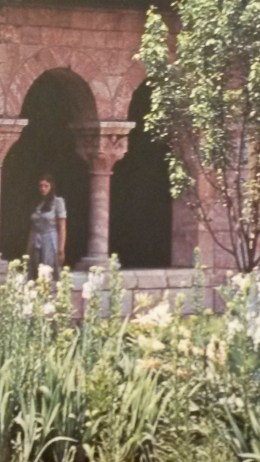
From the old world to the new, The Cloisters, 1978
I arrived in Cambridge, knowing no-one, and everyone I met, whether friends of friends or random encounters, had washed up there through the job or spouse lottery, some more happily than others. They all spoke of the town as a place they hadn’t chosen for themselves; it fitted like an odd shoe. Too provincial or too Yanky; too cold but a lucky escape from Trump heartland… The place had a charm though, they admitted, once they’d found their favourite spots and began living through them.
One Friday, it was unofficially Expats night at Cafe 1369 – a refuge for the friendly friendless, amorous opportunists or anyone who wanted to be alone together. I sat by my favourite pineapple lamp and took out a book of Emerson’s essays, trying to read, trying not to listen to the Beach Boys. Soon, I found myself talking to two MIT (Massachusetts Institute of Technology) scientists: one from Iran, the other from more prosaic Guildford, a town near where I grew up. These guys had essentially followed their research to wherever opportunities presented themselves; however far from home. If Princeton gives you a PhD scholarship, there you’ll go: though you might miss your parents and brother, not see them for whole stretches of time; though you don’t actually go to New York that often and spend most of the time out to pasture with your equations in a nice deer park; though you meet so few girls that you ask whether ‘Are you allergic to rabbits?’ is a viable chat-up line. Then, when the post-doc comes up at MIT, you can’t refuse: it’s not like there are that many jobs in this trade (wave-modelling) anyway. Waves, I found out, can be modelled directly from your laptop. But if you want to model them exquisitely, you kinda need to be in one of a handful of specialist labs, which could be anywhere and you have to be prepared to transfer between them if you’re going to be funded for your next project.
While Cambridge is lovely, it’s where these guys have chosen for their career and not for their whole selves. So it only stays half a home to them: another part of them misses where they came from; another still wonders about somewhere else entirely. When my work there is done, I too leave Cambridge half the way to creating a home. And then I get swept back into my real life in London. Some weeks later, it’s oddly vivid and unreal, like a distant experiment in living…
The island of utopia, a rabbit’s tail, a minimalist sneeze in a foreign museum …
Writers’ retreats are as wanky as they come, but necessary when you’re writing a book. They furnish inspiration at the beginning and filter out everyday distractions when you’re trying to finish. There are the formal ones that take you to the countryside haunts of Writers Of The Past for quite a fee. It is always the countryside, because the retreat-goers want some level of escapism, and a bucolic manor does this better for most people than a post-industrial wasteland. I’ve only gotten to the ‘scanning the brochure’ stage of these retreats, so really can’t comment on what goes on there…
Not the official writers’ retreat brochure, but equally picturesque, no?
Here are some nice alternative retreats I’ve heard of. No.1: THE CHILDHOOD FAMILY HOME. A friend who lives somewhere so remote and picturesque that I’m surprised that she hasn’t figured out that she can set up her own Writers’ Retreat and charge £700+ per week, goes back to stay with her family in a slightly less picturesque place when she wants to make serious progress with her book, because they are the funniest human beings alive. They feed directly into the book’s dialogue and amp up its mood. I imagine that another perk of this retreat, is that it provides free food and shelter…
No.2: THE EXOTIC. Another friend has quit her job and is moving to Bali for three months to finish the novel she’s had on her heart for six years. Bali! There will be chilled sunbathing, yoga and cafes by day, and furious writing by night. She’s been there before and says the energy is supportive for writing. Board and food are not free, but they are a lot cheaper than London. So, if you can get enough money for the plane ticket…
And mine? Let’s call it MY MOVEABLE FEAST. Yes, like so many other writers I went to Paris. I went there because it was easy to get to and I have somewhere free to stay, but also because I wanted to feel like I was writing the width of my book as well as the length of its plot. The clichés are right, Paris is one of the best places to observe life and jump into it. Apart from its beauty, the city’s social dynamic catches my eye straight away. People notice each other. They look, feel and register each others’ presence far more openly than in London. I remember this man’s shudder in the Metro when two women strode past him in clippety cloppety heels. It was as though he felt them walk right through him. Then there is how the waiter just knows to duplicate someone’s order when their companion arrives; the huddling of fur coats in the sudden giboulées de mars (a kind of snow-sleet, which returns to Paris every March)
How could something not happen here?
I also went to do some location research for my novel. Some places left me dry, but in others I experienced this strange kind of synchronicity, where I felt like the novel was unfolding around me. Before coming to Paris, I had envisaged a scene where a character gets the fright of her life in a graveyard. This idea was on probation- I could discard it at any moment for being too predictable and unconvincing. Anyway, I figured out that I had had half an hour before meeting a friend for brunch, so I would go and visit the nearby Montmartre cemetery to test the water.
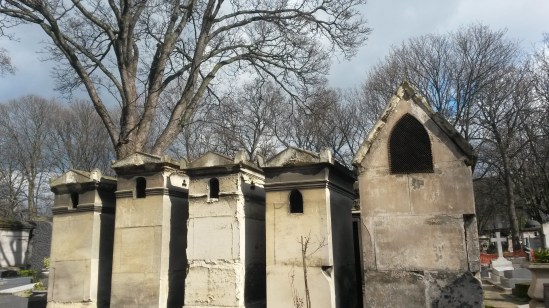
Passing by the tawdry wide front of the Moulin Rouge, the black and red sex shops and the funerary outfitters selling wax flowers, grecian urns and statues, I approached the cemetery casually, like it was another thing to look at. And then I saw that some of the graves had been moved beyond the cemetery gates, underneath an overpass, where vehicles thunder past constantly and there is a thick smell of gasoline. In case you’re interested, the graves were moved to this damned spot to fulfil Haussman’s stringent city plan in the late nineteenth century. These people’s families had built them elaborate marble fortresses to give them protection and standing in death, and now here they were, like vagrants under a bridge. I didn’t know what was worse, that these bodies had been moved, or that the families had put so much energy into trying to immortalise their dead, as though to deny the inevitable.
Imagine crossing a cemetery and a grand bourgeois street under a bridge…
Inside the cemetery, I felt even more unnerved, seeing that the headstones faced in all directions, and some of the death fortresses’ glass vitrines had fist-shaped cracks in them. A crow in a tree behind me made a choking sound; a wasp buzzed right past my ear, causing it to ring for a good five minutes, and giant cobblestones threatened to trip me up at any time. The place had so unhinged me that when a young girl in spectacles whizzed down the middle bannister of the stairs separating the higher and lower parts of the cemetery, I briefly entertained the idea that I had seen a witch of the storybook variety. I had gone into this place to pull the cheap parlour trick of a character who gets the fright of her life, and in a rare post-modern moment, I had gotten the fright of mine.
It may be expected that after this experience I wasn’t able to eat a bite at brunch- but no, I was starving and went at it like a Brit who’s paid and is getting her money’s worth. That night in bed though, I couldn’t get the cemetery out of my mind. Images from the day kept flashing back. I panicked about the unhappy ghosts wreaking their revenge because I was exploiting them for creative profit; pondered upon a friend’s comment that girls like me were the most susceptible to being spirited away in graveyards, and feared that I would develop post-traumatic stress disorder and never be able to erase the images from my mind.
Imagine this, circled by crows, grown fat with God Knows What, and you have it…
When trying to force myself calm didn’t work, I tried a counter-scare tactic. I should be more frightened of terrorists than ghosts, I told myself. A Londoner who hasn’t had a major terrorist attack in her city in the past two years, might think that terrorists are more of a real threat in Paris. Terrorists can’t walk through walls though, my subconscious answered back. They can’t just linger, like ghosts can.
This wasn’t to say that I wasn’t conscious of the possibility of an attack. It was unlikely, but you just had to be in the wrong place at the wrong time. I have to admit, I did try to second-guess the terrorists a little: judging by their previous record BD (comic-book) shops and anywhere hipster could be more risky, while the exhibition of gowns worn by Proust’s muse at the Musée Galliera in the chi-chi 16th district, was probably too obscurely girly to be on their radar.
I also instinctively searched for signs of terror in people’s faces and in the streets. Place de la République near where the attacks had happened was alive with breakdancers, lion statues daubed in bright graffiti and colourful poems, candles and bouquets for the terror victims; but Canal Saint Martin seemed a little deserted and sad for a Saturday. This may have been have been more due to the ferocity of the giboulées than the terrorists, though. A Parisian friend told me that the first weeks after the attacks, everyone was looking at each other suspiciously on the metro. By now, things were getting back to normal. Life goes on.
I realise that I’ve become distracted from the retreat theme in the process of writing. But maybe that’s what retreats are meant to be; a place where ideas can magically sweep together like pins to a magnet, but also somewhere where new yarns begin. Another labyrinth for Ariadne…
A Montmartre cinema disappearing into a cloudy sky…
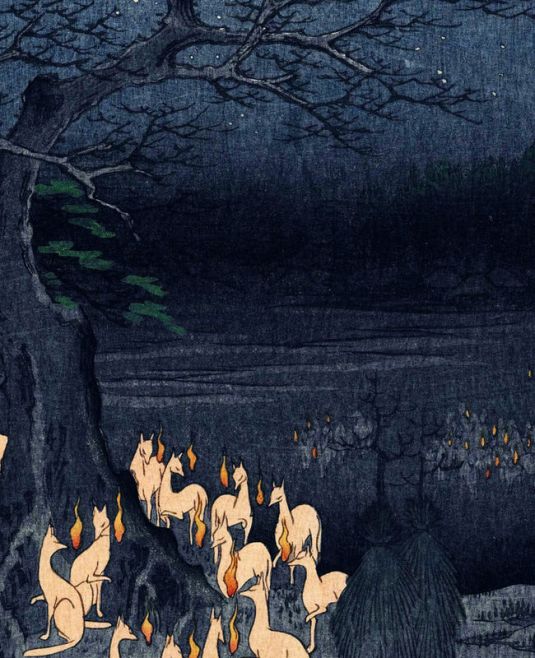
On the rainy night before New Year’s Eve, at around 5pm, a friend and I were hurrying to the station, past Victoria Park, when we glimpsed a weirdly poetic arrangement: just past the brim of my umbrella, a fox with a singularly lush pointed tail; in the middle distance, a silvery fountain streaming opulently, and furthest away, the Shard winked at us in its elvish festive get-up. There are no photos of this fleeting composition. Would the fox have stayed for anything in the pissing rain? Would we? Would any Instagram filter have made up for the failing light? But you’ll just have to take my word for it, it was magical in its own way.
Could have looked something like this: Hiroshige, New Year’s Eve Fox Fires At The Changing Tree, Oji, 1857
So close to the end of the year, I couldn’t help but see this trio as a kind of vision: the fox, the fountain and the Shard- all different and yet complementary- seemed like 3 wishes for the New Year.
The Fox
My friend, a Californian, told me that when she first moved to London and saw a fox, she initially thought she’d that seen a kind of cat with an odd-shaped tail. I laughed, but her comment made me see the fox with fresh eyes- it wasn’t just a mangy, flea-ridden dustbin hunter, but a tiger-coloured creature with a sly walk and an unearthly cry. Resourceful, shabbily elegant and a survivor until something eventually kills it, the fox is a paradox. Its very purpose is survival in uncertain, precarious circumstances. It will go on the hunt in all weathers and eat anything given the opportunity. By night it will scream and bark to assert its investment in territory or a mate. And yet it maintains that sleek, nonchalant boldness coveted by students of style…
The fox is a relevant symbol for the day-to-day aspects of 2016: earning enough to live, working towards a dream, having antennae for opportunities and putting yourself in the right place at the right time. The fox’s imagination is an earthly one; it sniffs out the way to the prize in the current situation, rather than dreaming up a realm of alternative possibilities. If the fox cared to counsel you, it would say ‘the answer is there… in that old contact/ that box under your bed/ the hobby you’ve been meaning to try for ages…but have you bothered looking?’
The Fountain
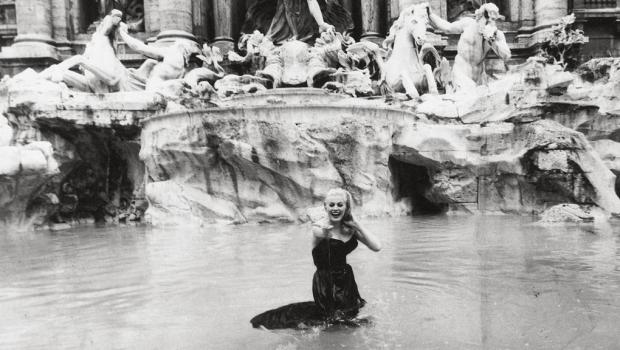
Anita Ekberg in Rome’s Trevi fountain, living, well, what else… La Dolce Vita, 1960
The fountain is life, abundance and the flowing of emotions. I hate that so many New Year’s resolutions are concerned with regimentation and meanness towards oneself or others. We strive to weigh less on the scales, restrict our social contact and give less to those who need it the most. We eat dull food, banish the booze and swap the glitter for grey. This is as close to being dead, while still alive, as it gets. I say that we should go the other way… Not that we should necessarily dissolve our livers in Scotch or buy the sequinned jumpsuit that bankrupts us, but just that we should be generous with our time, energy and resources. Keep giving to charity, go out dancing, share a beautiful meal, a household green initiative or a smutty joke. Above all, recognise that we live in a world of abundant possibilities and that generosity of spirit is rewarded in transparent and mysterious ways.
The Shard
The Shard in its fizzy Christmas spangles. Photo by Marco Uccelini on Flickr
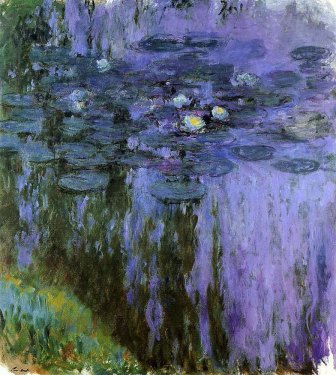
To me, the Shard represents worldly ambition and achievement. Up close it’s a bombastic structure with lucrative views, but at night from a distance, it’s a mystical witness, with one eye to your dreams and heartbreak. I’ve noticed that when it comes to worldly ambition people tend to fall into two camps; those who build their lives around establishing structures and flaunting them, and those who think a life based on worldly acquisition is too bourgeois, restricting or impossible for them. The former risk having a life that’s overly Shard-like, all structure and gloss, but somehow devoid of heartfelt qualities; while the latter, whose lives are effectively written on water, risk depriving themselves from having anything at all. I think it’s okay to have years where you focus more or less on ‘establishing’ goals. 2015 felt like a year when I experienced everything and built nothing. Its overly liquid quality made it one of the best and most frustrating years of my life. This year, however, I’m looking to redress the balance – I’m not going to build another Shard, just plant a few landmarks in my water-garden…
Monet in 1919, knew that the only landmarks worth having were living ones
‘You know the Bowery Hotel?… if you walk about a block South there is a laser hair removal centre that’s very hip. I did the waiting room,’ quips Greta Gerwig’s Brook to Lola Kirke’s Tracey in the film Mistress America (2015). Five months after its release, Mistress America has stayed in my mind for its zany account of someone who restlessly chases after new beginnings. Brook, the central character of Gerwig and Noah Baumbach’s modern screwball comedy, is a 30-year-old multitasking dynamo with fingers in many pies. She’s a freelance interior decorator, specialising in the City’s ancillary spaces; a maths tutor and a spin-class leader. When Brook meets 18-year-old Tracey, an insecure college student and her future stepsister, she’s about to launch Mom’s, her most ambitious project yet. Mom’s will function as an eatery, hair salon and sanctuary for frazzled Manhattanites. But when investment from Brook’s absent rich boyfriend Stavros falls through, and she is sent on an unlikely hunt for funds via a fortune-teller, her arch-enemy and an ex-boyfriend, Tracey suspects that Brook maybe headed for ruin. Whilst remaining on sisterly terms with Brook in person, Tracey, an aspiring writer, turns this to her advantage, by penning ‘Mistress America,’ a story where the central character Meadow is a scarcely-camouflaged Brook. With the inexperienced sagacity of an eighteen-year-old, Tracey pathologises Brook for her combination of hare-brained schemes and lack of ‘follow-through.’
‘Tracey, Welcome to the Great… White… Way!’
Brook might fall into martial arts trainer George Leonard’s definition of a ‘Dabbler.’* According to Leonard, ‘The Dabbler approaches each sport, career opportunity or relationship with enormous enthusiasm. He loves the rituals involved of getting started, the spiffy equipment, the shine of newness… The Dabbler might think of himself as an adventurer, a connoisseur of novelty, but he’s probably closer to being what Carl Jung calls the puer aeternus, the eternal kid.’ The Dabbler, Leonard considers, will never achieve mastery in his career or relationships because he finds the inevitable plateau that follows the initial spurt of excitement, unbearable. He is unable to plough on with his work when he’s not making obvious progress and gets bored and frustrated easily. Dabbler characteristics are anathema in martial arts and anything else where progress is slow and achieved with persistent hard work. But isn’t Brook required to be a Dabbler of sorts to thrive in the modern metropolis? Isn’t it her ability to abandon failing projects and find new ones that enables her to get by?
The Dabbler by another name…
If we strip back the screwball glamour of Brook’s eccentricities, her character and lifestyle are hardly unique. She is essentially a young woman with abundant ideas and energy, who has been trying to not only survive in New York City, but contribute to its status as a hub of urban innovation. She has thrown herself into numerous projects, which have flash-in-the-pan satisfaction and limited currency. By the time she haphazardly conceives the idea for Mom’s, she is ready for a more substantial commitment, which will liberate her from having to expend her energy on finite enterprises. Living in London, a city, which like New York, is a shiny jewel for magpies with artistic skills, education and ideas, I have met many variations on the Brook theme. As someone with myriad eclectically-financed projects on the go, I’m a version of Brook. Her trajectory through niche commissions, part-time jobs and wild-goose-chases for funds, feels both hilarious and authentic.
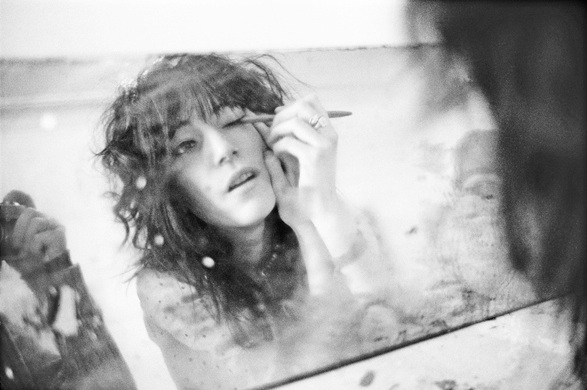
New York Dabblers and Artists: Patti Smith and Robert Mapplethorpe. Photo by Mapplethorpe
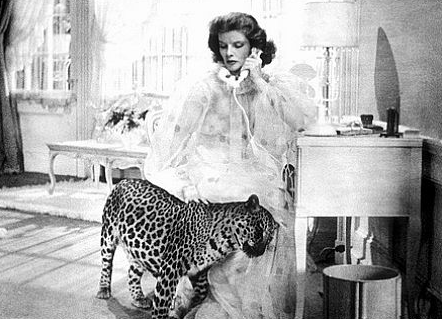
Post-recession, I would even argue that those who have forgone the cover of a corporate graduate scheme or other equivalent stability, have had to show Brook’s level of versatility (and charm), in order to earn enough to survive, or to ensure that they collate the diverse portfolio of skills needed for an ever-changing job market. When short-term contracts and one-off commissions are the norm, even if you do want to stay in one role and achieve what Leonard terms ‘mastery,’ you have to move on. Or maybe your dream-job, that you’ve trained all these years for, is about as hard to come by as snow in June, (or December for that matter), so you’re taking baby-bird steps to get there, via serial loosely-related fringe roles. Maybe you’re doing your dream job anyway, and don’t earn a living wage, so you have to scavenge for something that pays. Maybe mastery in one thing isn’t that important to you and you genuinely enjoy trying different types of work – is that a valid reason for self-flagellation? Whatever, the causes, ‘Mistress America’, with more hats than the Mad Hatter and more wiles than Katharine Hepburn’s Susan in Bringing Up Baby (1938), is no mythic unicorn, but a real modern type. Interestingly, the original 1930s screwball comedies with their untoward plots, physical humour and scrappy heroes who were capable of improvising their way into and out of trouble, were made in an era of mass unemployment following the 1929 Wall Street Crash. Perhaps it’s unsurprising that Gerwig and Baumbach should re-invent a version of the genre for our own age of precarious employment and economic uncertainty.
A dotty theme: 1930s screwball heroine Katharine Hepburn and her Baby
I realise that this is an odd Winter Solstice post, but it resonates with what I’ve seen, heard and felt this year. There are beginnings everywhere, but how can we tell which ones have mileage and which ones will lead us on the quest for a pot of gold at the end of the rainbow? And if they do send us on a leprechaun path is that such a bad thing?
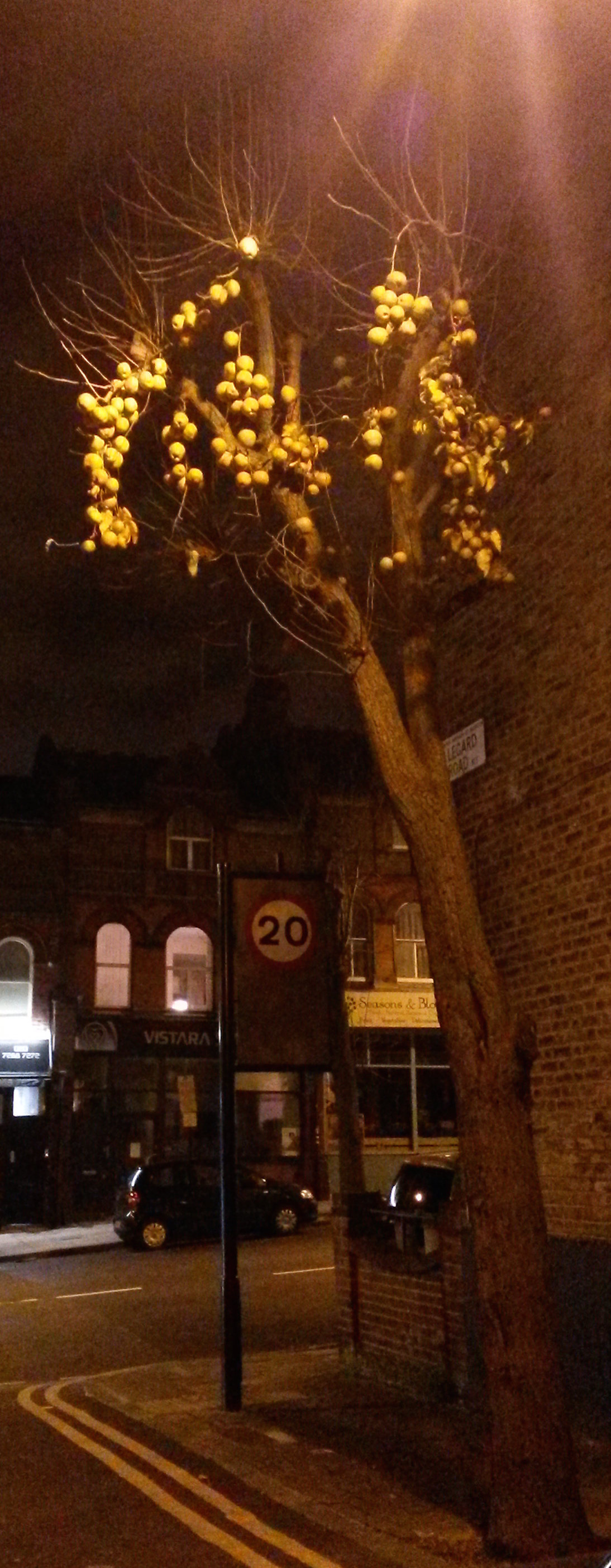
Golden apples grow at the darkest time of the year near the Arsenal stadium…
*George Leonard, Mastery: The Keys to Success and Long-Term Fulfillment (New York: Penguin Books, 1991).
I don’t steal other people’s books so much as ‘borrow’ them when they haven’t been officially lent to me. A primary instance happened when I was about eleven and my best friend and I were looking for trouble in her attic and found The Joy of Sex, a 1970s sex manual. We opened it up and simply stared. Body parts swelling and merging in ways we couldn’t imagine! And the man had long hair and a beard! This was mystifying in the age of Leo and the Backstreet Boys. We heard footsteps, and quickly stuffed the book back in its place, ensuring that the loose double-pages were folded back in. At that stage, we wanted a peek at knowledge that wasn’t available to us, but weren’t really ready to come to terms with it.
Kind of what happens inside The Joy of Sex. This is actually a clandestine copy of a Valentine in the Paris Opera archive, where I wasn’t allowed to take photographs.
This summer, I was in the makeshift office that had once been my brother’s bedroom and spotted a tomato-red, twenty-fifth-anniversary edition of The Alchemist by Paulo Coehlo. I remembered my brother mentioning it before his motorcycle and bonobo monkey research trip around Africa, and was curious. On the inner leaf was a dedication from an unknown Nik to ‘Mowgli’, his explorer alter-ego:
I wasn’t on the African adventure, but wanted to identify with the ‘true warrior’ who would receive such a dedication, so I slipped the book into my bag. I didn’t feel too bad about it because my brother freely ‘borrows’ my books and returns them in the state of shipwrecked voyagers, with curled pages and half-eroded covers. Besides, he was out of reach, so there was no way to ask him for permission. The Alchemist, a story of a shepherd boy’s trek to Egypt in search of the pyramids and a promised treasure, accompanied me on my own journeys across London for the 5 days it took to read it. In Alan Clarke’s translation, Coehlo’s prose had the spare and sparkling quality of a fairytale, with a touch more sentiment.
Proverbial phrases from the sages the boy meets on his journey, jumped out at me. They seemed relevant beyond the novel’s concise 171 pages and made me feel that its quest was my own. This was Coehlo’s intention for the book and I took the bait. Here’s an assortment of proverbs:
1.‘A blessing ignored becomes a curse…’ How simple, and yet how true. Neglected treasures, whether people, talents or possessions have a way of skulking around, casting great guilty shadows and becoming our enemies. A silk dress left in the closet attracts moths, a beloved who is taken for granted becomes a shrew, and creatives who sideline their practice are notorious drama queens and time-wasters.
2. ‘I know sheep can be friends… I don’t know if the desert can be a friend…’ This could be my favourite of the boy’s musings! It expresses gratitude and tenderness for the friendships he already has, and curiosity about the unknown. Sure, in many ways the arid desert seems the opposite of the shepherd’s fleecy flock; but he’s not about to dismiss it as an enemy out of hand. If more people were this open to difference, there would be less mistrust in the world and fewer wars, seriously.
3. ‘Love never keeps a man from pursuing his personal legend. If he abandons that pursuit, it’s because it wasn’t the love that speaks the language of the world…’ This comes up when the boy considers relinquishing his quest for treasure upon meeting Fatima, his heart’s desire, in an oasis. The statement advocates a world picture based on abundance and trust rather than scarcity and fear. It’s idealised, but I admire its generosity.
This fish’s personal legend was clearly to jump out of the water and dive into a book…
As much as The Alchemist paved its way into my thoughts, at times its gender bias reminded me that I had stolen the book from my brother. The male nameless shepherd’s personal legend is journey towards the treasure; whereas his Intended, Fatima’s personal legend is him. Fatima is given some of the most beautiful and moving lines in the book:
‘I’m a desert woman, and I’m proud of that. I want my husband to wander as free as the wind that shapes the dunes. And, if I have to, I will accept the fact that he has become a part of the clouds, and the animals, and the water of the desert…’
Her words are noble because they describe love as gift to be open to, but not as an entity that can be possessed and controlled. And yet, there is something limiting (Penelope-like) about her destiny as an eternally receptive vessel with no journey of her own. Doesn’t she want to wander too, have a personal quest that can coexist with her love, not be wholly informed by it? But there I go, imagining fairytale endings for a story that’s not mine…
Universal journey or Boys’ Own adventure?
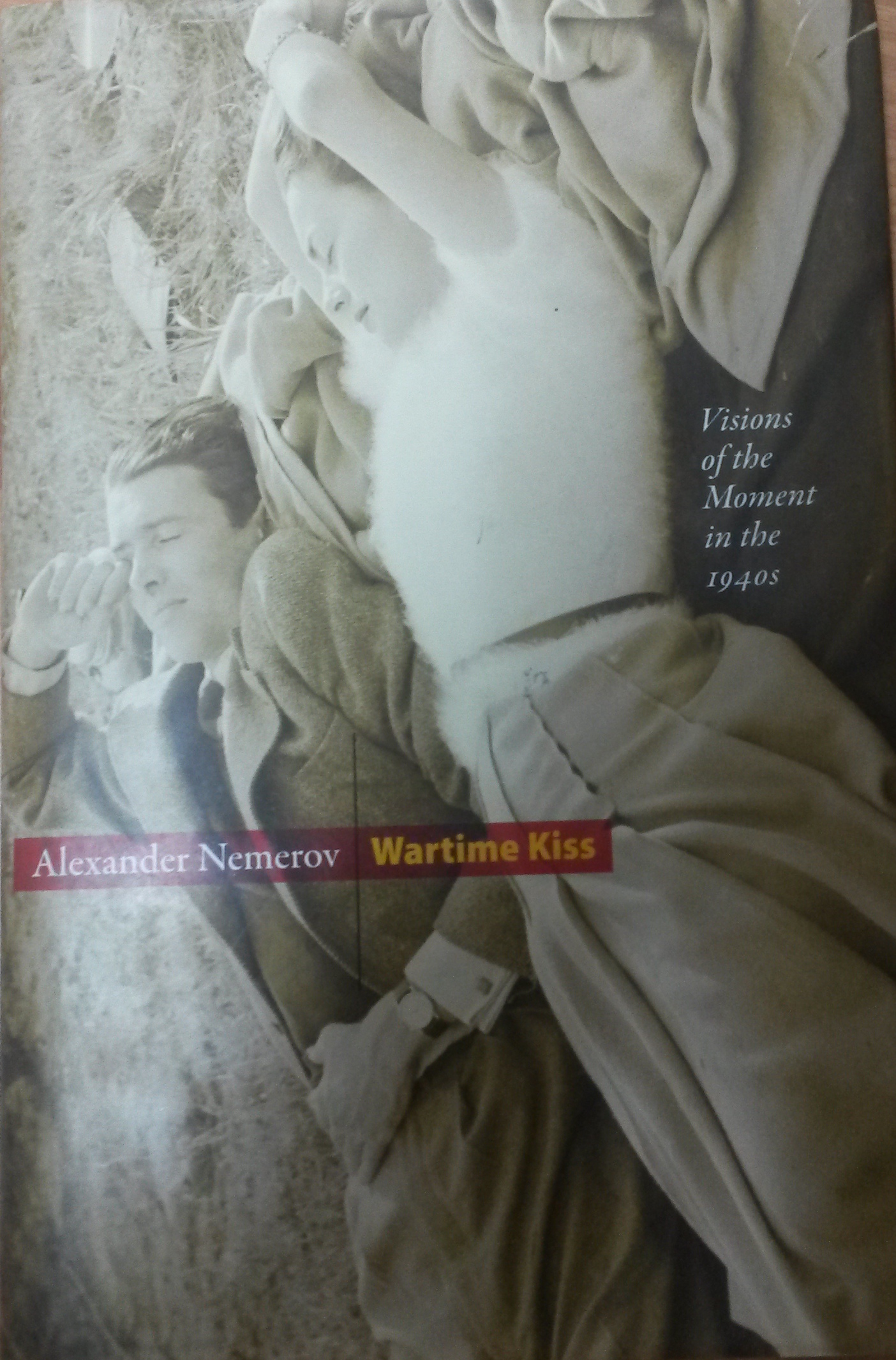
Some borrowings require more tact and subtlety. Every Thursday I sit in my supervisor’s office for an hour, when students can come and ask questions about the course. They rarely do. So I sit on her spinning chair and scan shelf upon shelf of books. Some are gleaming and expensive, with the aura of gifts; others are tiny, rare and cloth-bound; these, I imagine, have been carefully sourced. Intriguingly specific studies of now-forgotten designers are juxtaposed with sentimental titles like Wartime Kiss and generic volumes from grand theorists. The books have been thematically arranged and delicately handled. Apart from the odd volume placed askew, perhaps as a reference point, they appear as untouched as Snow White under rock crystal. When I take one to pass the hour, because after all, no one said I shouldn’t, I’m careful not to touch the book too much, change its shape, or God forbid, break its spine, and replace it with the exactitude of evidence in a murder scene. In this space, bibliophilia means something different from my own cavalier love for my travelling volumes. As a thief of sorts, I must be respectful, or get caught.
Immaculate book, crystalline pages
Poaching books is a way of crossing each other’s boundaries. We do it because we’re curious and want to be close, perhaps as a way of identifying with someone, or gaining some sort of subtle knowledge about them, or for ourselves. It could be seen as a creepy act, because no-one has given you direct permission; but, done respectfully, it can also be an empathetic gesture. Perhaps a person’s books, like their actions and body language, are indirect or surrounding manifestations of their character and dreams, beyond the words they choose to speak. To adopt Coehlo’s theme, these unspoken signals form part of ‘the language of the world.’
Reading List
Alex Comfort, The Joy of Sex (London: Quartet Books, 1974). *
Paulo Coehlo, The Alchemist: 25th Anniversary Edition, trans. Alan Clarke (New York: Harper Collins, 2014).
Alexander Nemerov, Wartime Kiss (Princeton: Princeton University Press, 2012).
*I can’t remember which edition we found in the attic, but this is the original.
For about 5 years now, a close friend has been advising me to read The Power of Now, a life manual by spiritual teacher Eckhart Tolle. She told me it had changed her life and would change mine. Nevertheless, for 5 years I resisted: the overly assonant title (2 ‘ows’, count them) put me off, and I was suspicious of the aura of salvation surrounding the book. I’ve never liked the idea that ONE book can save your life because it seems too doctrinal; instead I prefer to believe that many shape your life.
Anyway, I knew my friend meant business when The Power of Now arrived as a pdf into my Facebook inbox. Despite my earlier prejudices, I couldn’t help but be touched by this gesture, and so I settled down to read about twenty minutes a day. It was unlike anything I’d ever read; part self-help book, part-mantra, with the same elliptical conclusion at the end of each section: all that matters and even exists, is the present moment. The past and the future are psychological constructs, which take us away from the present by distracting us with anticipation, worry, nostalgia and regret. Tolle advises that you should only look forward or back to deal with the practical aspects of your life; learn from past errors or plan for future goals. Rather liberatingly, he conceives that a past identity will only haunt you if your presence, on the most literal level, isn’t strong enough. Reading this, I can now understand why people devote so much time and energy into meditation and mindfulness – so that they can learn to give each particular moment its due, rather than being enslaved by psychological time.
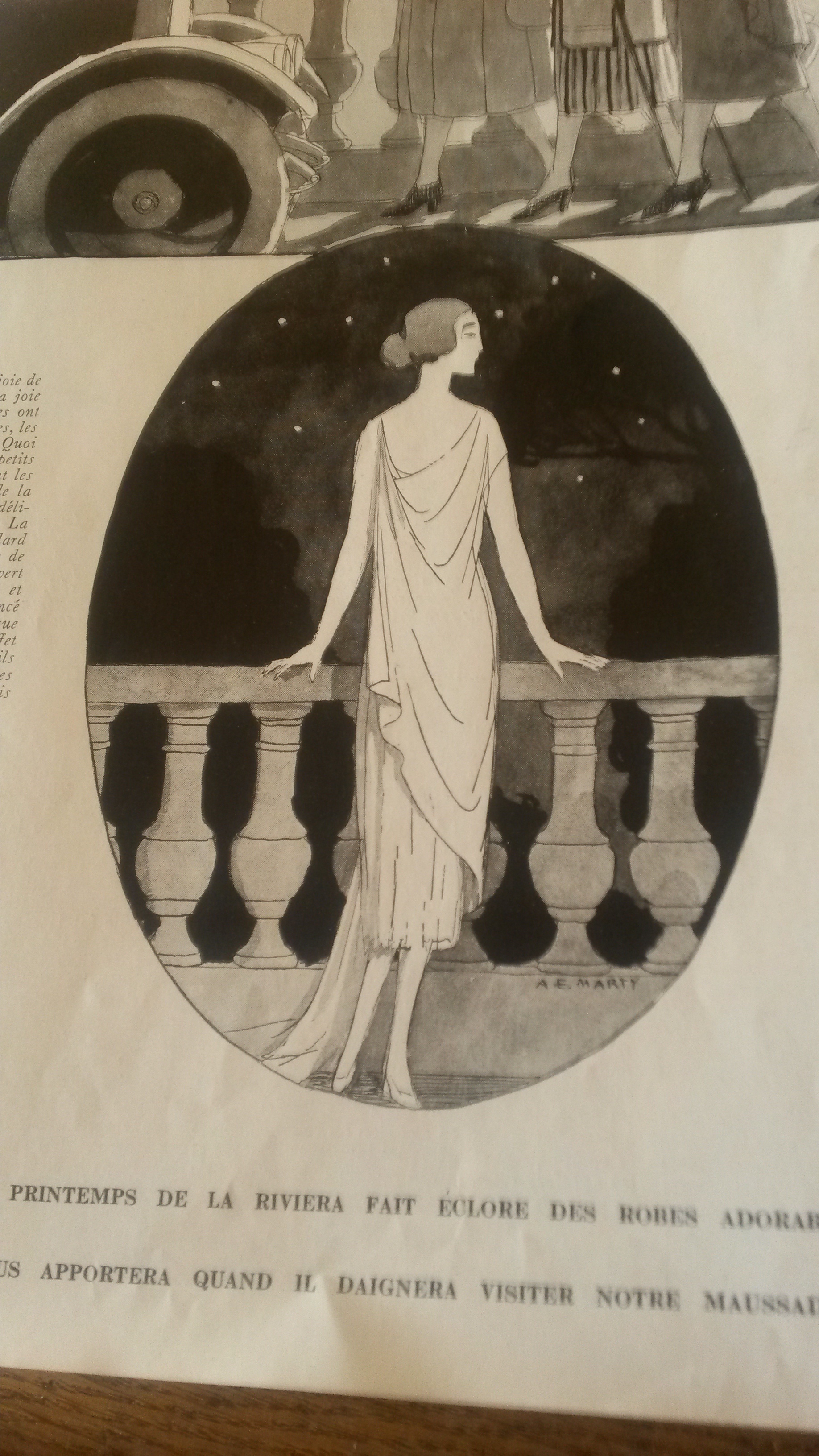
A new interpretation of Achilles’ heel; a goddess with back to front feet… Andre Marty, 1920
And yet, artists of all types find psychological time incredibly useful. The past (typically, childhood and formative experiences) is a rich resource for many, while notions of future utopias inform a lot of pioneering design. Family bonds are often formed on the basis of mutual memories and plans for the future. In my family, this temporal telescoping happens too much. Some senior members, see me as the little girl I was, or the ‘complete’ woman I will one day be. The restless, intractable young woman I am in the present disappears through the cracks, because unlike some neat mental construct from the past or future, she’s real, and difficult to pin down. I’m not exceptional in this respect, as these family members view others in exactly the same way. When people relate to one another on this projective, non-present basis, though, any possibility of real intimacy is voided, and you are left with the mere promise of love meant for an alternative version of you.
Past phases imbue a trippy glamour…
Tolle’s view of happiness, both in life and love is less based on pleasure, which he is convinced, soon turns to its opposite pain, and more on general contentment and feeling at one with the universe. Relationships are there for consciousness instead of fulfilment. So you go in there to learn, rather than feel impassioned, complete etc.When you meet the right one, they will reflect your soul just a bit more than any other part of creation visible from yonder window. Oddly enough, this isn’t so far removed from how love is described in a book Tolle would almost certainly denounce, Wuthering Heights; there Kathy describes her love for Heathcliff as resembling ‘the eternal rocks beneath: a source of little visible delight, but necessary… He’s always in my mind…as my own being.’ This unexpected, intertextual connection made me smile- as much as someone tries to categorise love, separate it out into good and bad, nourishing and destructive, truth and infatuation, it speaks another language, one that doesn’t care too much for our constructs.
And whether you are coupled up, single or in an ‘it’s complicated’ situation, to be happy, he says, accept what is, however challenging, dull or confusing. Unhappiness is caused by resistance to the present moment. When the present moment is unbearable, you have a choice to leave the situation, take direct action or just accept it as part of life. Many people unnecessarily torture themselves by mulling over their difficulties, and escalating their drama. He calls the accumulation of grievances and hurt in a person’s psyche ‘the pain body’. This parasite attacks who we are in the present by making a persona of Our Wronged Selves. Some people are wedded to their Victim/ Tortured Genius identity because it gives them a dash of spice in a vanilla crowd. Perhaps they are afraid to let go of their past wrongs because they fear that they will become insignificant in the present. Significantly, Tolle’s universalist theory makes no distinction between the Basil Fawltys amongst us (always going on about our War wound, the shrapnel in our knee) and those who have been wronged in a major way, for example, targets of terror, ethnic cleansing or rape. While it’s true that nurturing a Victim identity is disempowering for everyone, Tolle’s one-size-fits-all theory feels too simplistic for the complex world we live in.
Tormented geniuses are often found in sculpture gardens amidst an entourage of feathered furies…
In a recent article, Simon Kuper argued that our’s was the age of specialists in small things.* Unlike the big-picture ‘greats’ of the late nineteenth and early twentieth centuries (Einstein, Freud, Marx) the scientists, psychologists and political theorists of today, claim to be experts in a choice area of study; they can potentially improve the world in one tiny aspect. Tolle seems distinctly of the previous century, in the sense that he does posit a universal theory. This works fine, for the essential, eponymous premise of his book, but his ideas on gender and sexual orientation in particular seem trite and oversimplified, especially given his position of hegemonic privilege ( Straight White Male). Men are more likely to be divorced from being through mind-dominance (over-thinking), while women are more subject to the pain body, and especially before and during their periods. He regards menstruation as an opportunity to shed not only one’s womb lining, but one’s pain body and thereby one’s resentments. In an unintentionally amusing section, he describes how a ‘supportive male partner’ can remind women that they are suffering from the pain-body during PMT, and bring them back onto the course of acceptance. I can see a cuddle and a whiskey going down better, but what do I know, being a woman and not a spiritual leader?… His view that gays have greater potential to rise above the polarised, acerbic dynamics of the heterosexual world, so long as they don’t make an identity out of their homosexuality, equally reads as naive and dismissive of the long struggle that gay people have had to openly be themselves.
Overall, in spite of its glaring oversimplifications and humourless prose (there’s maybe one intentional joke in there about cats as masters of Zen), I’m glad I read The Power of Now. It’s lessons on living in the present moment, feel especially alive now, in the latest wave of global terrorist attacks. A friend in Paris understandably expressed that she was afraid because she didn’t know when the next attack would be. It’s so easy to feel powerless in this state of uncertainty, especially if you’re not someone who makes policy; but perhaps there’s all the more reason to prioritise what’s important in life, and not take the present for granted. Il faut vivre sa vie!
Love and beauty now
Reading List
Eckhart Tolle, The Power of Now, http://www.orgone.ro/doc/The-Power-of-Now.pdf
Simon Kuper, ‘Small Ideas are Better than Big Ones,’ Financial Times Weekend Magazine, October 23, 2015 *
I’m one of the lucky ones. I spend about an hour and a half on trains every day and rarely in rush hour, so I usually get a seat. I have access to a communal garden, which tempts me out when I have a spare half hour on warm days. I have a couch and bed for cold days. This means I actually have time and space to read books, some doorstopper thick and unportable, some sleek enough to go everywhere. The books I have on the go (typically two at a time) offer a commentary on wherever I happen to be, whatever I’m doing. They’re closer than friends, and their words revisit me inadvertently at unthinking moments… Sometimes, on a day like today, when I’m mildly hung over, I’m walking to the tube stop and the line ‘…My Paris/ Was only just not German’ (Ted Hughes, ‘Your Paris,’ The Birthday Letters) interrupts me for a reason I can’t completely understand. Why do I need this relatively unremarkable line right now?
My Paris/ Your Paris
When I get home, I find the poem. Hughes’ autobiographical account of how the Paris he remembers from his time as a soldier in World War II , (a city occupied by the Nazis where ‘So recently the coffee was still bitter/ As acorns’), differed from the experience of his wife Sylvia Plath, who tried to distract herself with ‘American’ Hemingway and Fitzgerald fantasies from the pain of her own memory of being rejected by a former lover in the city. The phrase I remembered is preceded by another forgotten one: ‘I kept my Paris from you’ (Hughes to Plath). These 6 words take me back to where I accidentally found The Birthday Letters the second time, in Word on the Water, a secondhand bookshop in a tugboat, on leafy Regent’s Canal in July. I was falling in love, and at the height of my giddy infatuation, my reunion with The Birthday Letters in such a poetic surrounding felt like kismet (his word not mine). Of course, The Birthday Letters document a love/hate dynamic, a narrative of intimacy and misunderstanding, and I could have seen them as a warning. What started out as passion and the immense desire to share everything, turned into hurt and privation, something being kept from me. Not a city, but a story it was thought I would never understand.
It’s funny, but Plath and Hughes volumes seem to jump off the shelves at me whenever I embark upon a cliched passion-motivated affair like theirs. Something about the dissenting voices, the sensuously acrid imagery, reflects something real right into my soul. Their words and my own satellite relationships give me no shortage of thrills, but leave me a little raw and hungry.
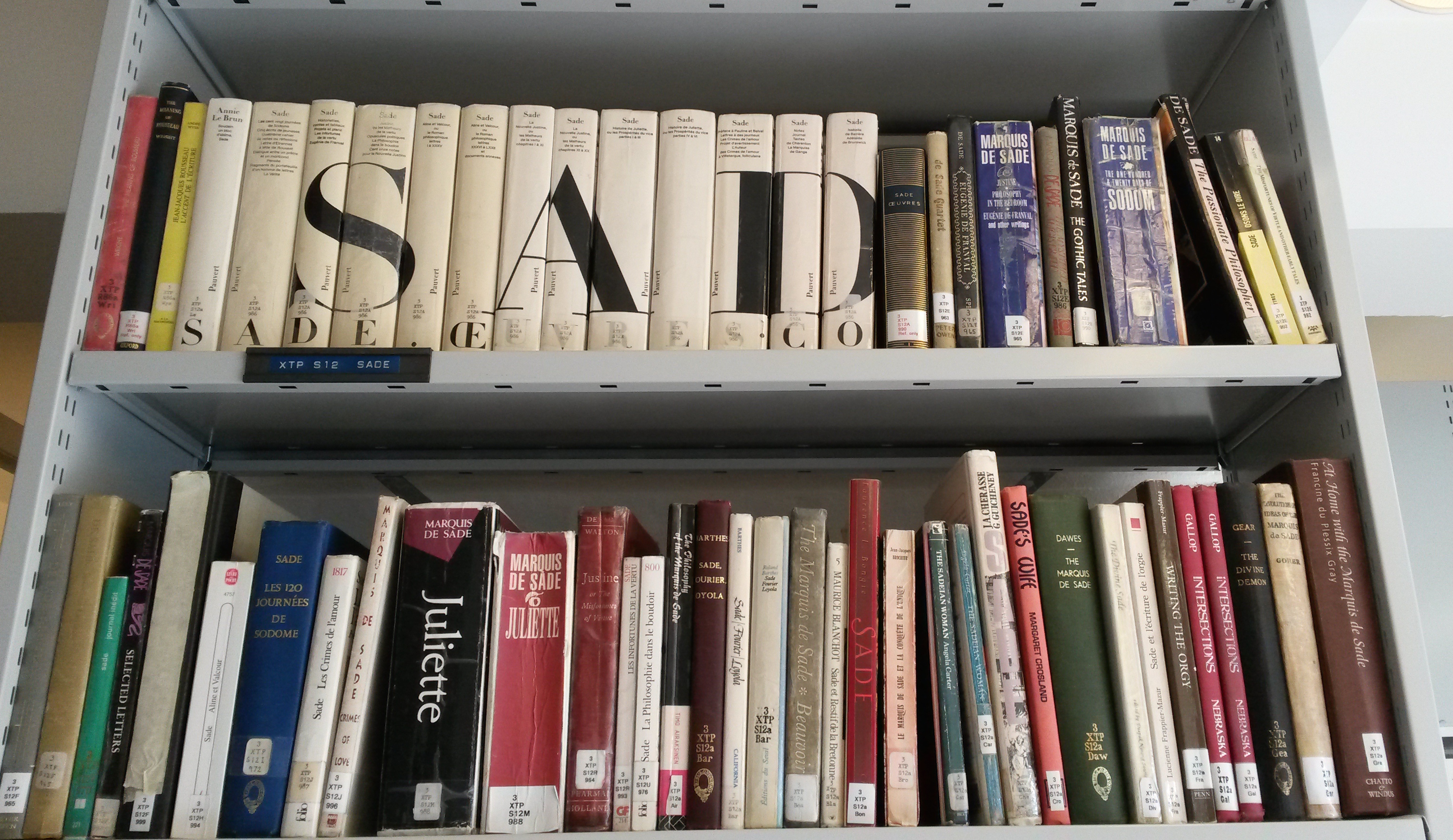
Shelf-full of Sad/e, Senate House
Seeking rootedness, sunshine and inspiration, I turn to my other relationships, and a trip to San Francisco. As I’m walking in the city’s Sunset District, I become intrigued by a neoclassical-fronted public library, guarded by marble lions and walk in. On a table I spot a book called Fairyland by Alysia Abbot. It’s cover is illustrated with a black and white photograph of a slick, elfishly handsome man in a dark suit, holding a white magnolia. Behind him is an earnest, exquisitely-featured little girl in a long chintzy white nightgown. It must be magic realism, a modern fairytale, I think, and turn it over. But when I do, I find out that it’s a woman’s memoir of growing up in San Fransisco with her gay father in the 1970s and then nursing him through Aids. I’m not sure I can read this right now- It feels a little too close to home when I’ve recently been overwhelmed with the news of one close friend’s serious illness and another’s bereavement. I put the book down- it belongs to the library anyway, so it’s not like I can take it away. But then the day before I’m due to catch the ten-hour flight home, I persuade my friend Nikki and her mum to go to touristy North Beach, and drag them into City Books, (Jack Kerouac’s favourite, incidentally), where all I want to buy is Fairyland.
Ten minutes of Fairyland in St James’ Park when I’m early to a meeting…
It’s beautifully written, searching and honest- I like how Abbot pilfers through her father, Steve’s poems and private correspondence to conjure up his side of the story as a counter-narrative to her own. Poetry, bohemianism and love are prominent, but Abbot doesn’t brush over the mutual inconveniences of their family unit. Her presence as a demanding child and bratty teenager damages Steve’s credentials as lover, and there are times when his flamboyant homosexuality and hippiness embarrass her. Abbot’s account of her search for a life of her own as a young woman as Steve’s illness advances, is especially moving. Much of this is related through their letters, precious documents where they exchange ideas about life as well as reports of their everyday experiences. I’m reminded that dying and living aren’t the opposites that they’re generally seen to be, that a sick person may be languishing in body, but enjoying a vivid mental and spiritual experience. This book, which has made me a little less afraid of sickness and death, ends on a tender, marvelling note: ‘This place Dad and I lived together, our fairy land, wasn’t make believe but a real place with real people and I was there.’
While my foray into the life and death theme was accidental, over the past few months, I’ve been consciously drawn to makers’ narratives. It’s essentially the same story told a little differently told each time. A person with big ideas, a smattering of talents and scattered means, makes something of their life. I’d been meaning to read Deborah Lutz’s The Bronte Cabinet: Three Lives in Nine Objects for a while, and found it in the Camden Waterstones last month. It’s a weighty tome with a midnight blue waxy jacket, gold lettering and a comely aloe smell. I could only read it at home or on journeys when I knew I wouldn’t be walking much. Anyway, I found Lutz’s account of how the Brontes created their famous stories in and amongst their possessions, chores and life crises strangely comforting. Books doubled as storage units, presses and even writing paper, when the latter was scarce and expensive, and someone had a story idea that just had to be captured, even if there was literally marginal space for it. Plots were discussed around pudding bowls, and developed in breaks from sewing- an accomplishment the Bronte girls wanted to keep up, so that they wouldn’t become decadent, unfeminine literary types. I like this idea of creativity amongst stuff and busyness rather than ascetic vocationalism, not only because it’s realistic, but because it’s generous and intricately woven into life.
Book As Press, Natural History Museum, London
The figure of Emily Bronte, the wildest of the sisters has always intrigued me the most, and it horrified society to think how this ‘slim, wick of a girl,’ a clergyman’s daughter nonetheless, conceived a hero as violently savage as Heathcliff. As far as we know, she had no such lover, or even character in her life; but Lutz speculates that Emily’s familiarity with Lord Byron’s works, as well as her affinity with the untamed moorland and acute observations of dogs, (pre-Chiuaua-era they were much closer to their lupine cousins), would have been enough. About one hundred years later in Paris, people would marvel at how the seemingly innocent eighteen-year-old Francoise Sagan (real name Quoirez) could create a novel as candidly racy as Bonjour Tristesse. Anne Berest’s focused study of Sagan’s life in 1954, the year of Bonjour Tristesse’s publication, is another account of how a green young woman possessed the sensitivity and acute powers of observation to write beyond her personal experience, and get published. I think that Emily and Francoise’s examples stand out in my mind, because there are things that I want to achieve where I can envisage the result, but not the next step. So many times, writers are told to draw from their own experience, but Emily and Francoise didn’t have that much, so they took what they had, and with a dash of inspiration, jumped into the unknown.
Creativity in between… Chalk on Blackboard, Unisex Toilet, Cheeky Parlour
Reading List
Alysia Abbot, Fairyland (New York: W.W. Norton & Company, 2013).
Anne Berest, Sagan: Paris, 1954 (London: Gallic Books, 2015).
Ted Hughes, The Birthday Letters (London: Quality Books, 1998).
Deborah Lutz, The Bronte Cabinet: Three Lives in Nine Objects (New York: W.W. Norton & Company, 2015).
As we approach Father’s Day, we’re inundated with reminders to celebrate the man who taught us how to ride a bicycle, balance a budget or send an unwanted suitor running home to his mummy. The adverts range from predictably cutesy – the start-up promising to deliver a gift ‘as unique as he is,’ to bafflingly creepy- the Aramis cologne advert that reminds you it’s father’s day, and swiftly follows up with the clip of a James Bond-type eyeing up a girl in a swimsuit from behind. Who can bear the thought of their old man as a player? Are they seriously suggesting that you hand him a bottle of Aramis with a wink and ‘Go get ’em Tiger?’
Dads are blown up to heroic proportions on Fathers Day. Here’s a gift suggestion from the British Museum.
Anyway, though my dad and I love each other to the moon and back, he didn’t teach me any of the practical things that the cutesy adverts promised he would.* (Luckily, I never caught him acting like the ‘dad’ in the Aramis advert either!) Still, his words and actions can be mapped into life lessons. Recently, I’ve been thinking about the beliefs I inherited from my parents, and how my own experiences have either confirmed or challenged them. More and more, I realise that truly becoming an adult is taking responsibility for your life and learning to trust your own judgement. Yet so many of us struggle with the living legacy of our parents’ beliefs. We oscillate wildly between reverence and rebellion, rarely taking the time to think about where we actually stand. So, I thought I’d list and evaluate the things I learned from my dad, to see what should be treasured, and what in the words of my spooky masseuse, Kryztina, should be ‘sent back into the universe for recycling.’
1. Read Homer, quote Homer Simpson. Dad’s favourite Homer quotation is ‘Don’t try kids, because trying leads to failure and disappointment.’
I think that Dad means you should be learned, but not a humourless arse. I’m fully on board with this, and especially feel shortchanged when people give conference papers without the flair of Homer or the ribaldry of Homer Simpson. How dare they take away half an hour of my life, not seek to entertain and move me!
2. People who grow up in conflict-zones (like him) are risk-averse, but people who grow up in relative peace and prosperity (like me and my brother) are adventure-seekers.
Learning this has been invaluable to understanding my Dad, and more cautious, as well as brave and resilient people like him. However, I’ve also seen the opposite: risk-averse squares with stable childhoods, who want carbon-copies of their parents’ lives, and folks who live on a whim because they have never had stability.
3. Days range from bad to exceptionally bad, but that’s the way life is, so be cheerful about it.
I’ve learned that dad’s combination of pessimism, sensitivity and humour is actually quite rare. I once dated a supreme pessimist, and was very naively waiting for him to laugh at his tortured soul, but he never did. There are no two men alike, and looking for someone like your dad, however unconsciously, is futile. The best you can hope for is someone who is wonderful on his own terms.
4. People who love you can disappear and go silent for a while, but they still love you will reappear when they’re ready/ when it suits them. (In the past, my Dad was periodically absent, but he always came back)
Guess what, people who don’t love you can also imitate these behaviours… And life is too short for an eternal game of hide and seek! I still struggle with comings and goings, if I’m honest.
5. Strong, resourceful, intelligent women are far more valuable than the delicate and girly ones. Dad loves telling stories about his infinitely practical mother and martial grandmother.
I admire the feminist sentiment here, but don’t feel that you can polarise women in this way. From my experience, strength and delicacy are not mutually exclusive, and the brave, creative women I most admire are also exceptionally vulnerable. I am somewhat delicate, girly and impractical – maybe as a means of rebelling against my dad’s ideal- though I retain my share of grit.
6. Decisions are final, and have fairly predictable consequences. Dad likes to say ‘Is that what you want?, because that’s what’s going to happen!’
Only in a fairly predictable universe, so unlike this one. Actually, not all decisions are final, and the their is never what you think it is. However, you can hypothesise from patterns in your past.
7. Good books rely above all, upon a solid, stimulating plot. Homer’s epics are timeless, whereas Virginia Woolf’s stream-of-consciousness rambles will eventually become irrelevant.
I disagree, but not as much as I used to. Woolf’s fluid narratives are of course vital because they convey the experience of living and being connected to other lives. They have already stood the test of time, and will continue to do so. But for the most part, beautifully-textured sentences can’t save a boring course of events, and there’s nothing like a pacy plot or fascinating character to make twelve Piccadilly line stations seemingly dissolve into three.
8. Vogue** and other lifestyle glossies are damaging because they plant unrealistic expectations of life into (usually female) readers’ heads. Dad imagines a scenario where a girl, usually one with the wits of one of Marilyn Monroe’s 1950s secretary characters, goes wildly into debt for the love of a Chanel handbag.
Over three centuries ago, the proto-feminist Mary Wollestonecraft expressed similar fears about the expectations of women who read novels. Dad, Ms Wollestonecraft, it’s OK, women read for reasons other than to imitate the lives of It girls called Cressida, or Gothic heroines called Emily. I once tried to explain to Dad that people don’t read Vogue like the Ikea catalogue, with a red marker in hand, drawing rings around covetable items, but for escapism and inspiration. He wasn’t convinced.
9. You can be stingy with yourself, but not with others. Dad only updates his wardrobe when his clothes fall apart, but considers scrimping on food and wine for his guests a major social faux pas.
Agreed- though I’m not especially stingy with myself, and don’t buy the most expensive wine for parties where the primary purpose is to get lashed.
Questioning your dad’s advice can feel like turning conventional wisdom on its head.
Over the years, I’ve wrangled with my Dad’s lessons, some of them preached, some of them gleaned from his way of doing things. They’re my inheritance, to be dipped into like a wise, if sometimes exasperating favourite book. Yet there are other books to read, and perhaps even write. It’s been liberating for me to learn that I can be open to my dad’s love and advice, and simultaneously form and trust my own opinions.
* Mum taught me to ride a bike and balance a budget, and Madame de Lafayette gives some elegant tips on dealing with unwanted attention.
** By some weird coincidence Dad shares a birthday with the formidable American Vogue editor Anna Wintour. They’re both intelligent, ‘take-charge’ Scorpios. That’s about all they have in common.




















 andthepea